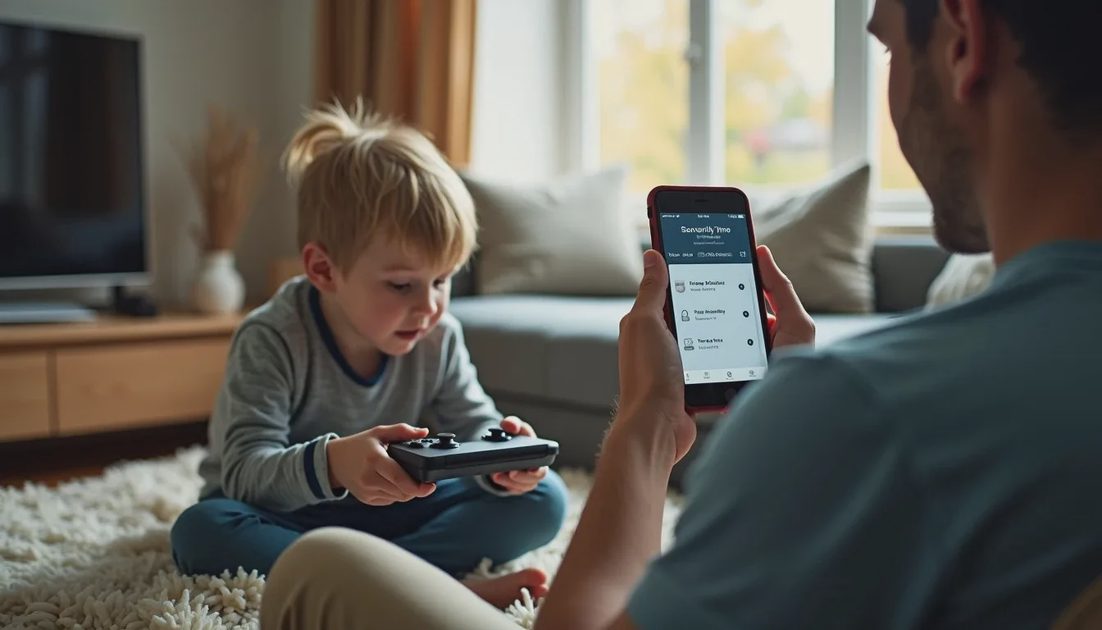
Parents usually lock down email and banking logins with unique passwords and two-factor authentication. The same household often leaves a child’s Roblox, Fortnite, Minecraft, or similar account protected by a short password that has been reused across school portals and free game sites. That imbalance is common and unnecessary.
Gaming accounts are no longer just play spaces. Many hold virtual currency, rare items, and progress that represent real time and, in some cases, real money. Account takeovers, phishing for login credentials, and “free Robux/V-Bucks” scams are routine. When the account is linked to a parent’s payment method, the consequences can extend beyond lost skins.
Why Gaming Accounts Attract Attention
Virtual items and currency have secondary-market value. Accounts with rare cosmetic items or large balances are traded and stolen. Attackers use several reliable methods:
Credential stuffing: testing username-and-password pairs leaked from other breaches
Phishing pages that mimic official login screens and promise free currency or exclusive items
In-game or chat messages that direct players to fake sites or ask them to “verify” their account
Social engineering that moves the conversation off the official platform to Discord or similar services
Children are frequent targets because they are motivated by in-game rewards and may not recognize the patterns adults have learned to distrust. A single compromised gaming login can also expose a reused password that unlocks email or other services.
The Most Common Gaps in Household Practice
Several patterns appear repeatedly:
Reused or weak passwords. A short, memorable password shared across the game, school email, and a couple of free apps is still the default in many homes. Once that combination appears in a breach, every service that uses it becomes reachable.
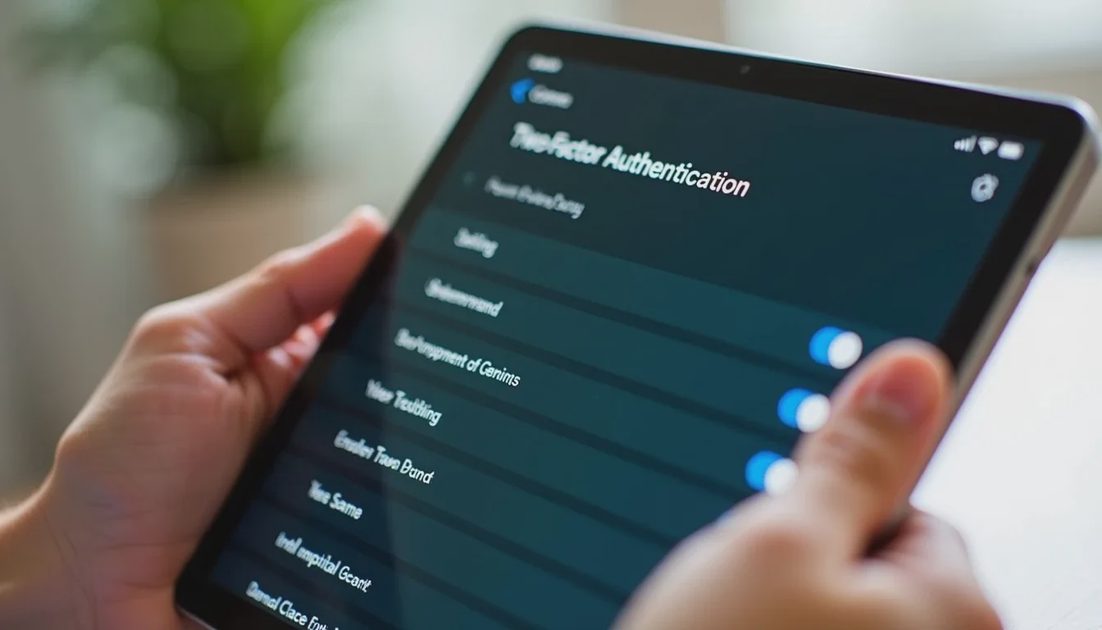
No two-factor authentication. Most major platforms offer 2FA. It is often left disabled because setup feels like an extra step or because the child resists anything that slows login.
Linked payment methods without oversight. Saved cards or parent PayPal accounts make purchases convenient and also make unauthorized charges possible once an account is taken over.
Chat and friend features left wide open. Strangers can initiate contact, send links, or pressure a child into moving the conversation elsewhere. Platform safety tools exist but are not always configured.
Assumption that “it’s just a game.” The emotional impact of losing years of progress or a carefully built inventory is real for the child. The practical impact of a linked payment method being abused is real for the parent.
Practical Steps That Close the Gap
Treat the gaming account with the same basic hygiene applied to email.
Create a unique, strong password stored in a family password manager. Do not reuse the password from email, school, or other games.
Turn on two-factor authentication wherever the platform supports it. Prefer an authenticator app over SMS when both are available. Keep recovery codes in a safe place the parent controls.
Review payment settings. Remove saved cards if they are not needed for regular purchases, or set purchase approvals so the child cannot complete transactions alone.
Configure privacy and communication settings. Limit who can send friend requests or messages. Disable or restrict open chat features that are not required for the games the child actually plays.
Talk about the specific scams. Explain that free-currency generators and “verify your account” links are almost always traps. Agree on a simple rule: never enter the gaming password on any site that is not the official game or platform page typed by the parent or child together.
Monitor for early warning signs. Sudden inability to log in, unexpected friend requests, or messages about “account verification” deserve immediate attention. Change the password from a clean device and review recent activity if anything looks wrong.
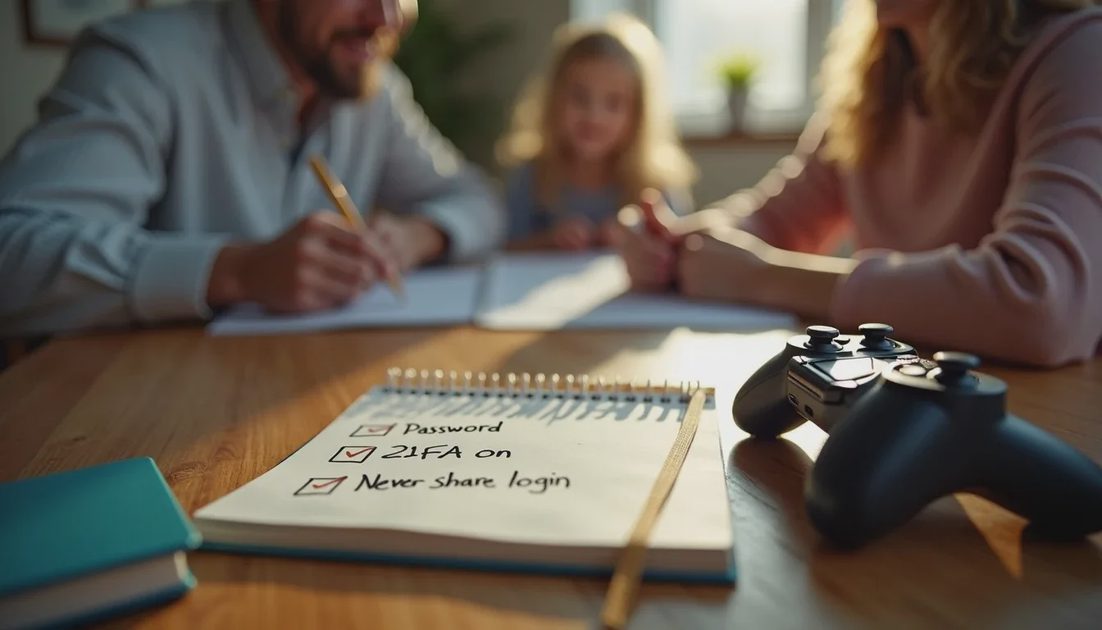
These steps take less time than recovering a compromised account or disputing charges. They also reduce the chance that a gaming login becomes the entry point to broader household accounts.
A Proportionate Approach
Not every child needs maximum lockdown. A younger player on a tightly supervised shared tablet requires different settings from a teenager managing multiple platforms. The consistent principle is that the account’s real-world value—time invested, items collected, and any linked payment method—should determine the level of care, not the fact that it is labeled “just a game.”
Email and banking deserve strong protection because the consequences of compromise are obvious. Gaming accounts deserve comparable basic protection because the consequences are more common than many parents realize and because the same weak password habits often link the two. Closing that gap is one of the higher-leverage, lower-effort improvements a household can make.